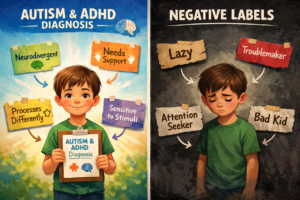
At Bucks, we take a thorough, compassionate and individualised approach to ADHD assessment. Our aim is not simply to identify whether ADHD is present, but to understand the whole person — their strengths, challenges, development and individual needs.
1. Initial Enquiry & Telephone Consultation
We begin with a friendly telephone session to understand the presenting concerns and what has prompted the referral.
During this conversation, we will:
- Discuss your concerns and answer any initial questions.
- Explore the difficulties you or your child are experiencing.
- Explain what an ADHD assessment involves.
- Consider whether an ADHD assessment is the appropriate next step.
- Identify whether any additional areas may need to be explored.
2. Gathering Background Information
We gather detailed information to help us understand the individual within the context of their life.
This may include:
- Developmental history
- Family and medical background
- Educational history
- Social and emotional development
- Current difficulties and strengths
- Information about home, school or work
- Relevant previous assessments or professional reports
We may also ask parents, carers, teachers or other professionals to complete questionnaires where appropriate.
3. Cognitive Assessment for Children
For children, we can include a cognitive assessment as part of the ADHD assessment process.
This helps us understand their learning profile, including areas of strength and areas that may be more challenging. It can also help identify other factors that may be contributing to difficulties, such as learning differences or other underlying needs.
Looking at the wider picture helps us make recommendations that are appropriate and meaningful for the child.
4. Face-to-Face Assessment
We meet face to face to complete a thorough background history and clinical assessment.
We explore how difficulties present across different areas of life, including:
- Attention and concentration
- Impulsivity and activity levels
- Organisation and executive functioning
- Emotional regulation
- Relationships and social experiences
- School, university or work
- Everyday functioning
For children and young people, we also consider their own experiences alongside information from parents/carers and other settings.
5. School Involvement
Where appropriate, we communicate with the child’s school to gain a broader understanding of how they present within the educational environment.
This may involve:
- Speaking with teachers or the SENCO.
- Reviewing relevant school information.
- Gathering teacher questionnaires.
- Discussing classroom presentation and learning needs.
- Where helpful, arranging a school visit.
This allows us to consider whether difficulties are occurring across different environments and helps us understand the child more fully.
6. Bringing the Information Together
Our clinicians carefully consider all the information gathered throughout the assessment.
This may include questionnaires, developmental history, cognitive assessment results, observations, school information and face-to-face discussions.
We consider ADHD alongside other possible explanations and any co-occurring needs, so that the assessment provides a whole-person understanding rather than focusing on one set of symptoms in isolation.
7. Feedback
Once the assessment is complete, we arrange a feedback session to discuss the findings.
We explain the outcome clearly and sensitively, answer questions and provide an opportunity to discuss what the findings mean in everyday life.
8. Comprehensive Report & Recommendations
Following the assessment, you will receive a written report outlining the assessment findings and, where appropriate, the diagnosis.
Our recommendations are personalised to the individual and may include strategies and support for home, school, university or the workplace, as well as suggestions for reasonable adjustments and further support where appropriate.
9. Support Beyond the Assessment
An assessment is often the beginning rather than the end of the journey.
Where appropriate, we can discuss ongoing support, additional assessments, reviews and strategies to help individuals and families understand their needs and move forward with confidence.
Different minds. Brighter futures.