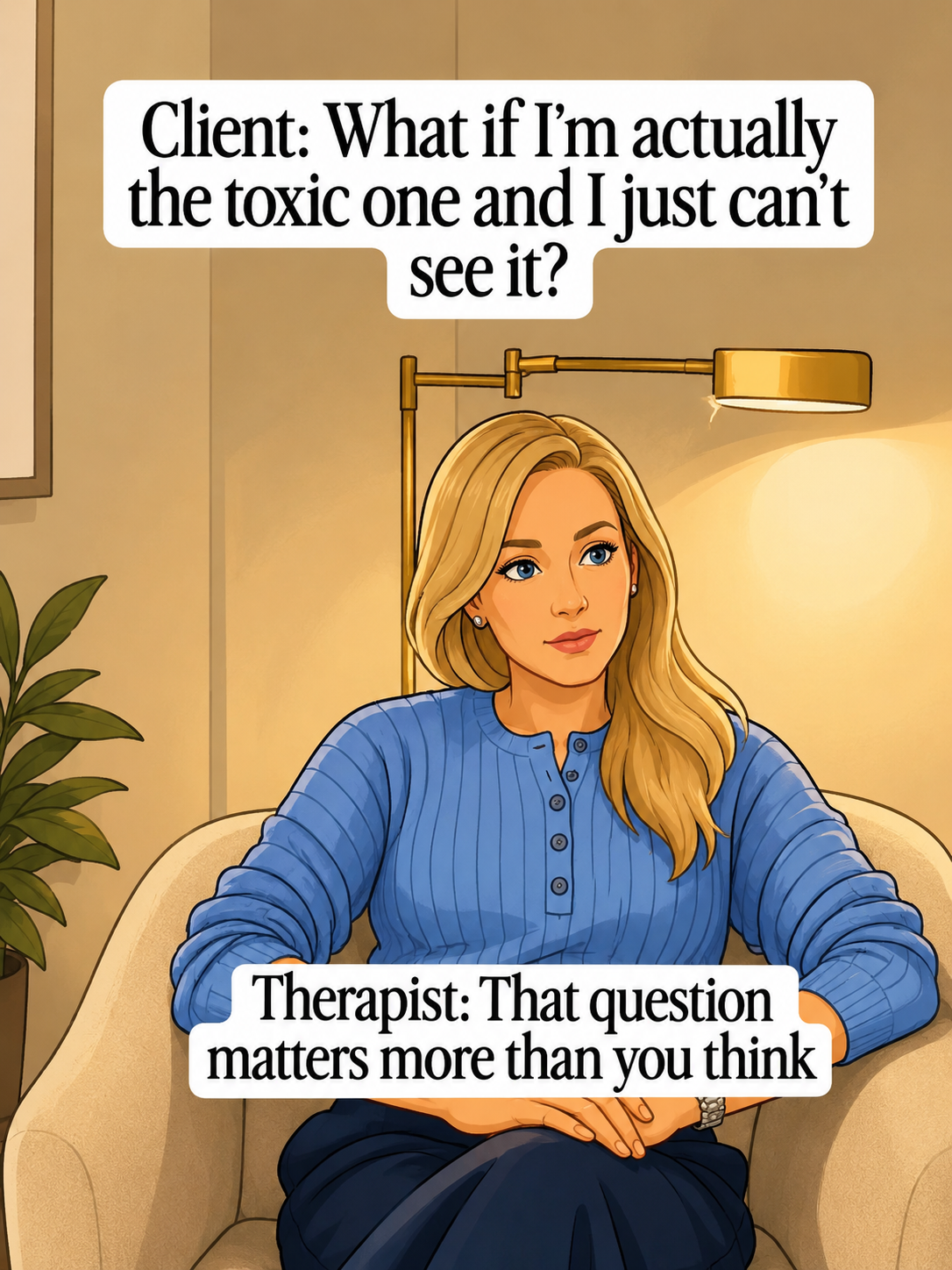
There is a particular kind of confusion that can happen in unhealthy relationships.
A woman begins to question herself.
She says, “Maybe I am too emotional.”
“Maybe I ask for too much.”
“Maybe I am controlling.”
“Maybe I really am the narcissist.”
Sometimes that self-questioning comes after repeatedly being told by a man that she is selfish, toxic, difficult, dramatic, crazy, or narcissistic.
And this is where we need to slow down.
The word “narcissist” should never become a weapon used to silence a woman who is trying to speak about how she has been treated.
That does not mean every woman who is accused of narcissism is innocent. Women, just like men, can behave selfishly, manipulate others, avoid accountability, or display narcissistic traits. We should be willing to look honestly at ourselves.
But there is a significant difference between holding someone accountable for genuinely harmful behaviour and using psychological labels to avoid accountability yourself.
Sometimes the accusation becomes the distraction
Imagine a woman says:
“You hurt me when you lied to me.”
Instead of addressing the lie, the conversation becomes:
“You’re always making everything about you. You’re a narcissist.”
She says:
“I don’t feel respected in this relationship.”
The response becomes:
“You’re controlling.”
She says:
“I need boundaries.”
The response becomes:
“You’re selfish.”
Eventually, the original issue disappears.
The lie isn’t discussed.
The disrespect isn’t discussed.
The broken boundary isn’t discussed.
Instead, the woman is put on trial for having a reaction to what happened.
And she begins defending her personality rather than addressing the behaviour that hurt her.
A woman having boundaries does not make her narcissistic
A woman saying no is not automatically controlling.
A woman asking for honesty is not automatically demanding.
A woman expecting respect is not automatically entitled.
A woman leaving a relationship that is hurting her is not automatically selfish.
A woman becoming angry after being repeatedly dismissed does not automatically make her abusive.
And a woman finally speaking up after years of swallowing her feelings should not automatically be diagnosed from the other side of the relationship.
Sometimes what gets called “narcissism” is simply a woman no longer accepting behaviour she used to tolerate.
But we also have to be honest
This isn’t about turning the tables and declaring that all men are narcissists and all women are victims.
That would simply create another unhealthy stereotype.
The goal isn’t to protect women from accountability.
The goal is to make accountability fair.
If a woman has hurt someone, she should be able to hear it.
If she has behaved badly, she should be able to apologise.
If she has unhealthy patterns, she should be able to work on them.
But accountability should not require her to accept a label that someone has thrown at her.
And the same standard must apply to men.
A man who has genuinely been mistreated deserves to have his experience taken seriously too.
The question isn’t “Who is the narcissist?”
Perhaps that’s the question we need to stop asking so quickly.
Instead, ask:
What actually happened?
Who lied?
Who crossed boundaries?
Who took responsibility?
Who apologised?
Who repeatedly dismissed the other’s feelings?
Who could admit when they were wrong?
Who changed their behaviour?
Who used blame to avoid difficult conversations?
Who felt afraid to speak honestly?
Who was allowed to have feelings?
Who had to constantly defend themselves?
These questions can tell us far more than simply throwing the word narcissist at someone.
And perhaps the most important question is this:
Can both people take responsibility for their own behaviour?
Healthy relationships don’t require one person to be the villain and the other to be completely innocent.
Two people can make mistakes.
Two people can hurt each other.
Two people can have unhealthy patterns.
But when one person consistently refuses accountability and instead makes the other person responsible for everything, something much deeper is happening.
And if every attempt by a woman to discuss her pain ends with her being told that she is the problem, she may eventually stop trusting her own perception.
That’s where the real danger lies.
Because once you have convinced someone that their feelings are evidence of their dysfunction, they may stop asking:
“Why am I being treated this way?”
and start asking:
“What’s wrong with me?”
That question can keep someone trapped for a very long time.
So before calling a woman a narcissist, look at the behaviour.
Before calling her toxic, look at the entire relationship.
Before telling her that she’s the problem, ask whether you’ve been willing to examine your own part.
And before she accepts someone else’s label as the truth about who she is, she has every right to pause and ask:
“Is this genuine accountability—or am I being blamed for reacting to something that hurt me?”
Because those two things are not the same.