For many years, autism has been understood and diagnosed through a largely male-focused lens. As a result, autistic girls and women are significantly under‑identified, misdiagnosed, or diagnosed much later in life. One of the key reasons for this is masking – a coping strategy many autistic girls develop in order to fit in socially and meet external expectations.
This article explores what masking is, how it often presents in girls, signs parents and professionals can look out for, and why a diagnosis can be life‑changing rather than limiting.
What Is Masking?
Masking (also referred to as camouflaging) involves consciously or unconsciously hiding autistic traits in order to appear more socially acceptable. This can include:
- Copying peers’ behaviour, language or facial expressions
- Suppressing stimming or sensory needs
- Rehearsing conversations or social scripts
- Forcing eye contact despite discomfort
- Over‑monitoring one’s behaviour to avoid standing out
While masking can help a child blend in socially, it comes at a significant emotional and psychological cost.
Why Are Girls More Likely to Mask?
Girls are often socialised from a young age to be polite, compliant, emotionally attuned and relationship‑focused. Many autistic girls are highly observant and quickly learn that their natural way of being is perceived as “different.” As a result, they work hard to adapt.
Unlike boys, who may show more overt externalising behaviours, autistic girls often:
- Internalise distress
- Present as “quiet,” “anxious,” or “perfectionistic”
- Appear socially interested, even if interactions are exhaustingBecause they may cope well at school or appear to have friendships, their difficulties are frequently overlooked.
Signs of Masking Autism in Girls
Autistic girls who mask often go unnoticed because they do not fit stereotypical presentations. Signs to look out for include:
Social and Emotional Signs
- Extreme exhaustion after school or social events
- Emotional meltdowns at home but not in public
- Intense anxiety about friendships or social rules
- Feeling like they are “pretending” or playing a role
- Difficulty knowing who they really are
Behavioural and Cognitive Signs
- Perfectionism and fear of making mistakes
- Strong sense of justice or rule‑following
- Rigid thinking masked by people‑pleasing
- High self‑criticism and low self‑esteem
Sensory and Regulation Signs
- Sensory sensitivities hidden during the day but released at home
- Avoidance of certain clothes, noises, or environments
- Shutdowns rather than visible meltdowns
Friendship Patterns
- One intense friendship at a time
- Friendships that are imitative rather than reciprocal
- Being vulnerable to exploitation or bullying
The Cost of Masking
Long‑term masking is associated with:
- Chronic anxiety and burnout
- Depression and reduced self‑worth
- Identity confusion
- Increased risk of self‑harm and eating difficulties
- Delayed diagnosis or misdiagnosis (e.g., anxiety, OCD, personality disorders)Many autistic women describe reaching adulthood before realising they are autistic – often after years of struggling silently.
Why a Diagnosis Is Helpful
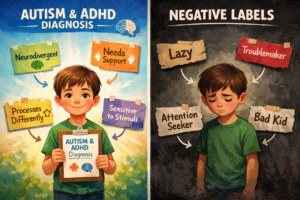
A diagnosis does not change who a child is, it explains them.
1. For the Child or Young Person
- Provides language to understand their experiences
- Reduces shame and self‑blame
- Validates their internal world
- Supports identity development and self‑acceptance
2. For Families
- Offers clarity and reassurance
- Guides more appropriate support and expectations
- Helps parents advocate effectively
3. For Schools and Workplaces
- Enables reasonable adjustments
- Promotes understanding rather than punishment
- Reduces pressure to mask
Early identification can protect mental health and help girls develop in ways that honour who they are — not who they feel they must pretend to be.
Moving Toward Unmasking and Wellbeing
The goal is not to teach autistic girls to mask better, but to create environments where they do not need to.
This includes:
- Neurodiversity‑affirming support
- Emotional literacy and regulation skills
- Safe spaces to be authentic
- Adults who listen and believe them
- When autistic girls are understood early, they are far more likely to thrive.
Final Thoughts
Autistic girls are often hiding in plain sight – coping, performing and paying the price quietly. Recognising masking behaviours and seeking an assessment is not about labelling; it is about understanding, validation and support.
If a girl is doing well on the outside but struggling deeply on the inside, it is worth asking not “Why is she coping?” but “What is it costing her?”
If you are concerned about masking or autism in a girl or young person, seeking an assessment with a clinician experienced in female autism presentations can make all the difference.